
Endless love
Christian romance from the 1990s, Wuthering Heights, and weird mystical language

Have you ever tried to contemplate your belovedness? It’s more difficult than it sounds. Try contemplating how loved you are by God without being sidetracked by all your regrets, failings, and fears.
This morning, I read Isaiah 43:1-19 to get myself in the “belovedness” state of mind.
If you’ve read much of Isaiah, you probably know these words:
“Do not fear, for I have redeemed you;
I have summoned you by name; you are mine.”
These words are spoken by God through the prophet to the people of Israel in Babylonian exile. They are offered as comfort, to bolster the people to have hope that they will be rescued.
What struck me most in this passage was the strange language God uses to speak of love. The rest of the chapter has gentler words of love, rescue, and care, but here, “you are mine” almost echoes like a jealous lover: aggressive, obsessive, staking a claim.
When I was a teen in the 1990s I used to read Christian romances by Lori Wick. I read her Kensington Chronicles over and over.
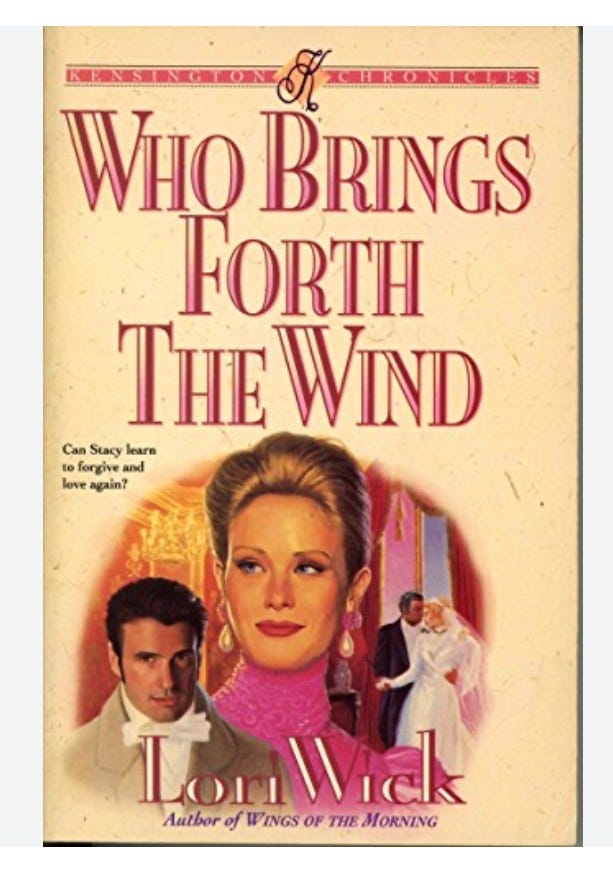
My favorite in the series was Who Brings Forth The Wind.
A synopsis from abebooks reads:
“Leaving the English countryside to spend the summer in London with her aunt, Stacy Daniels finds herself caught up in a new world of balls and teas and captures the attention of the handsome Duke of Cambridge, who is battling his tormented past.”
Classic.
Innocent stunning beauty attracts the attention of the mysterious brooding noble. They marry. He continues to be tormented. His inner demons shadow their marriage. Out of his pain, he humiliates her. She still loves him. She waits. Her love brings him back. He is sorry. And eventually he is redeemed by her unwavering love.
The recent movie “adaptation” of Emily Bronte’s novel Wuthering Heights —which purports to be a “primal” and “sexual” version—had a strong opening on Valentine’s weekend, despite mostly terrible reviews. I am fascinated by the hype.
When I read Wuthering Heights in highschool, I hated it. None of the characters are noble or likable, besides Edgar (I guess) and the younger Catherine. It’s not at all romantic even though some have considered it the greatest love story of all time. In truth, the novel Wuthering Heights is a sad tale of tormented, toxic people who destroy each other.
I preferred Emily’s sister Charlotte Bronte’s gothic novel Jane Eyre. No—scratch that—I didn’t prefer it, I adored it. I even wrote a paper on it for my senior English class.
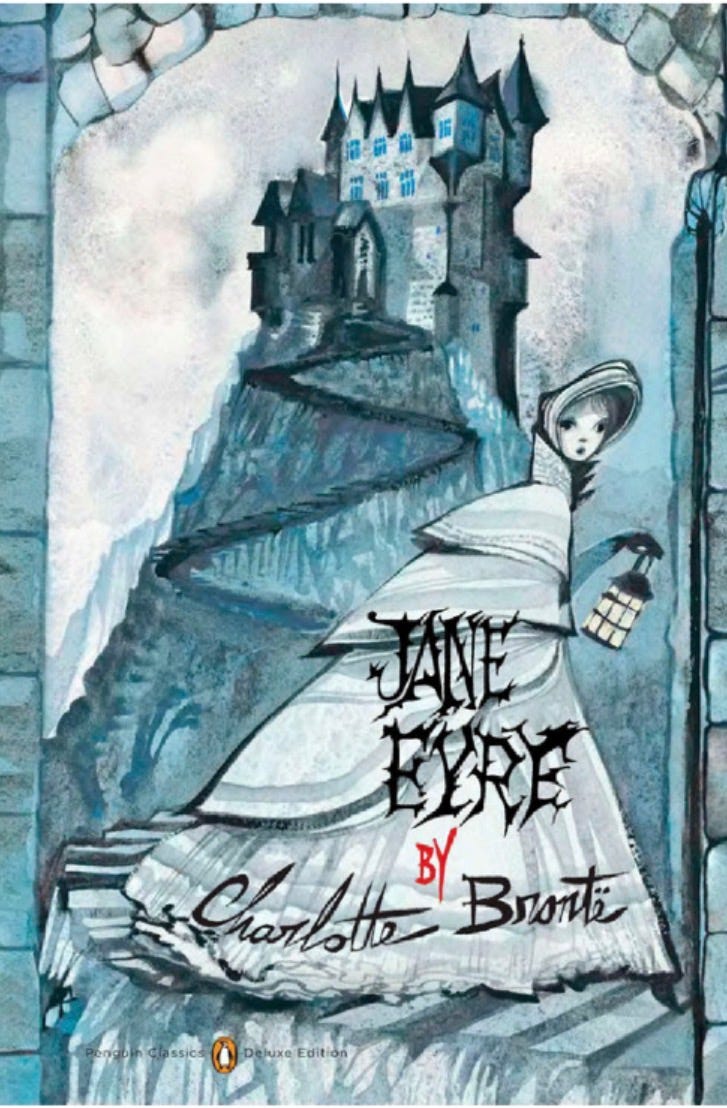
Jane is a smart, strong, noble young woman willing to leave her love (even though she’s penniless) to stand up for what is right.
Just because I loved Jane doesn’t mean I didn’t also love the romance in the novel…Rochester loved Jane desperately and chose her, even though she was plain, poor, and little.
But, wait, isn’t Rochester toxic too? I know, I know…I get that now. He lied to and manipulated Jane and, yea, spoiler, locked his wife in a tower.
I guess that makes my point.
I longed for a man to see me, choose me, know me, and love me, not despite my imperfections but because of them. And I wanted us to have an everlasting love.
Emerald Fennell, the director of the “Wuthering Heights” movie said she made a movie that her fourteen year old self wanted when she first read Wuthering Heights (this brings up more questions about a fourteen year old wanting erotica…).
I’m not judging anyone for loving Wuthering Heights or romance novels or romantic movies. I love a good fantasy romance novel myself and, if I’m alone, you will find me rewatching any Jane Austen (or Jane Eyre) adaptation I can find. Also, the novel I’m writing definitely has romance in it.
I’m just wondering if some romantic books and movies can pull at a longing for something that still feels like it comes from the depths of a fourteen year old heart. Which, let’s be honest, is not quite ready for mature love.
Strange as it sounds, these were some of my thoughts when I meditated on Isaiah 43 and my belovedness this morning.
I thought about those Christian romance novels I read as a teen, how I hoped my heart would be filled by the man who got me, who would see me, who would be transformed by my love.
I thought about how no man in the real world can fill that void inside me.1
I thought about how many a woman has been caught up in a toxic relationship because the man initially showered her with romantic sentiments, that a man wanting to possess her seemed romantic until it wasn’t.
I wonder if Emily Bronte knew that the kind of obsessive love many women desire, in real life, can end the way her novel does—in revenge, spite, and tragedy.
There is a long tradition in Christian mysticism of using imagery and language about Jesus that might make some of us uncomfortable. If we’re not used to it, it can sound weird, but for many mystics using sexual language was a way to approach what it might be like to have true union with God.
Think of Margery Kempe, a 15th century mystic who got married young and birthed fourteen children. Eventually, she asked her husband if they could refrain from sex…and really, who can blame her? 14 children in the Middle Ages?!
One writer reminded me that some of her visions “read almost like a modern romance novel” with language about intimacy and marriage to Christ. Kempe and other mystics actually viewed Jesus as their heavenly spouse.
Jesus was the only one who could love them fully and intimately.
Which brings me back to Isaiah and “you are mine.”
In his essay On Fairy Stories, J. R. R. Tolkien talked about fairy stories and fantasy as giving us glimpses of joy, of worlds beyond, of our deepest longings for God. I think romance stories also get at an unfulfilled longing in the human heart. They show us our desires, some good and some very unhealthy. They show us our longings for love, for completeness, for being seen and known by another.
Forgive me if I make a bold claim at this point but I believe God is the only one who can offer us the kind of love that will fulfill that longing, whether we are fourteen or forty.
Personally, I can’t withstand the gaze of obsessive love. I don’t think anyone can, really.
But I don’t have to withstand the kind of love that gives more than it receives, that—to quote another famous passage—is patient, kind, does not envy, does not dishonor, is not self-seeking, is not easily angered, keeps no record of wrongs. A love that always protects, always trusts, always hopes, always perseveres.
That’s true love. And it is truly endless.
I just want to note that I am actually married to a wonderful man who loves me and gets me—well, he gets me most of the time. My point is that marriage isn’t like the books and movies. It’s real. But, if you have someone who is willing to work at it, it can actually be better than your fourteen year old self could have imagined.
Christiana this is a deeply moving post. There is something healing and, I dare say, biblically affirming about your perspective. Thank you for sharing and for reminding us that intimate relationship, truly knowing GOD as was modeled in the Garden of Eden, is our true call.